Wednesday, 2 July 2014

Drawing inspiration from bird specimens

Dark-eyed Junco closed wing (above) and spread tail (below)

Junco's wing - upper-side (above) and underside (below)

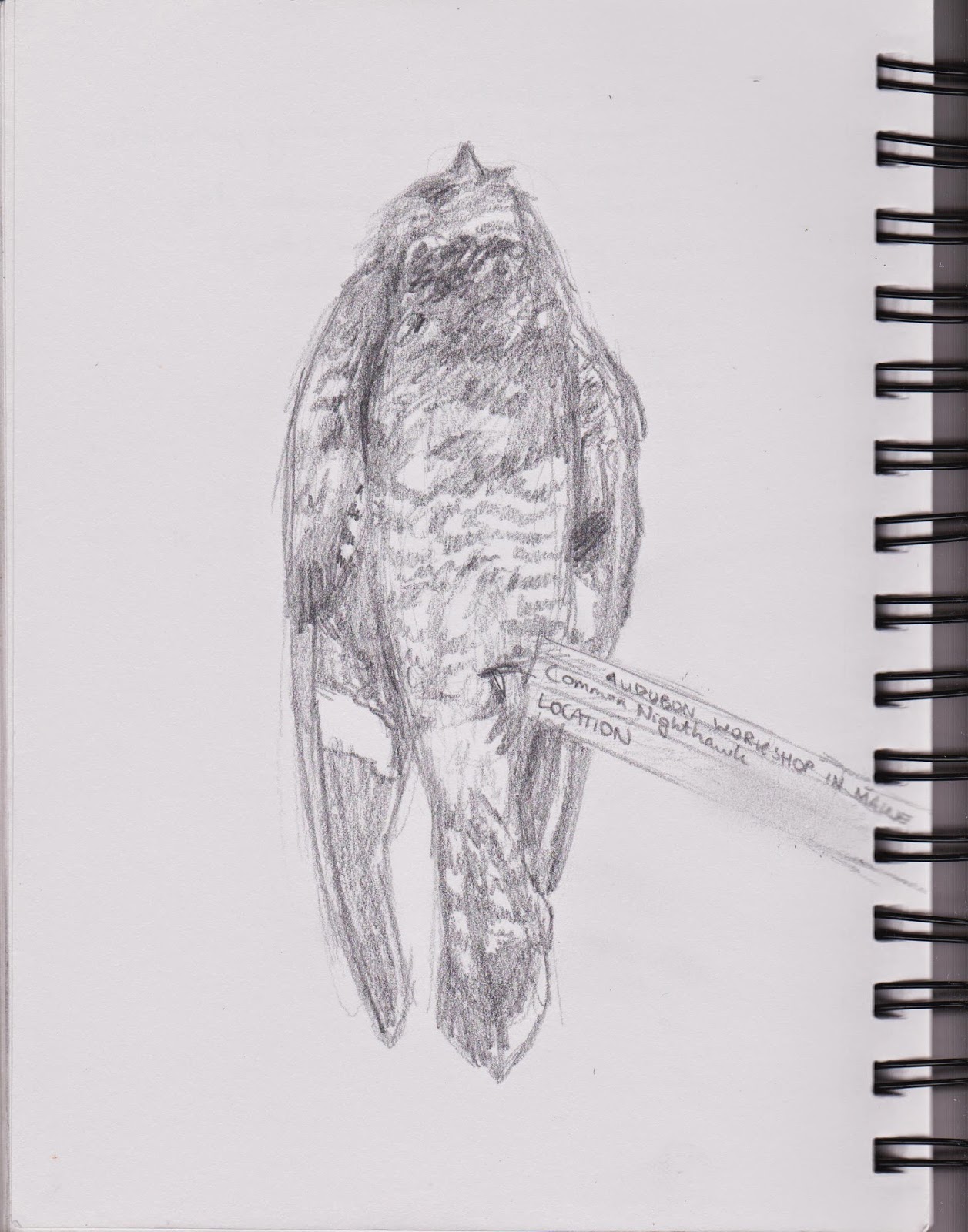
Common Nighthawk specimen

Gull's skull

Hog Island Nature

Intertidal zone discovery: Crab claw

A lavender-coloured wildflower - yet to be identified

Periwinkle snail - delicious when roasted just right!

Pitcher plants

Maine Seabird Sketches

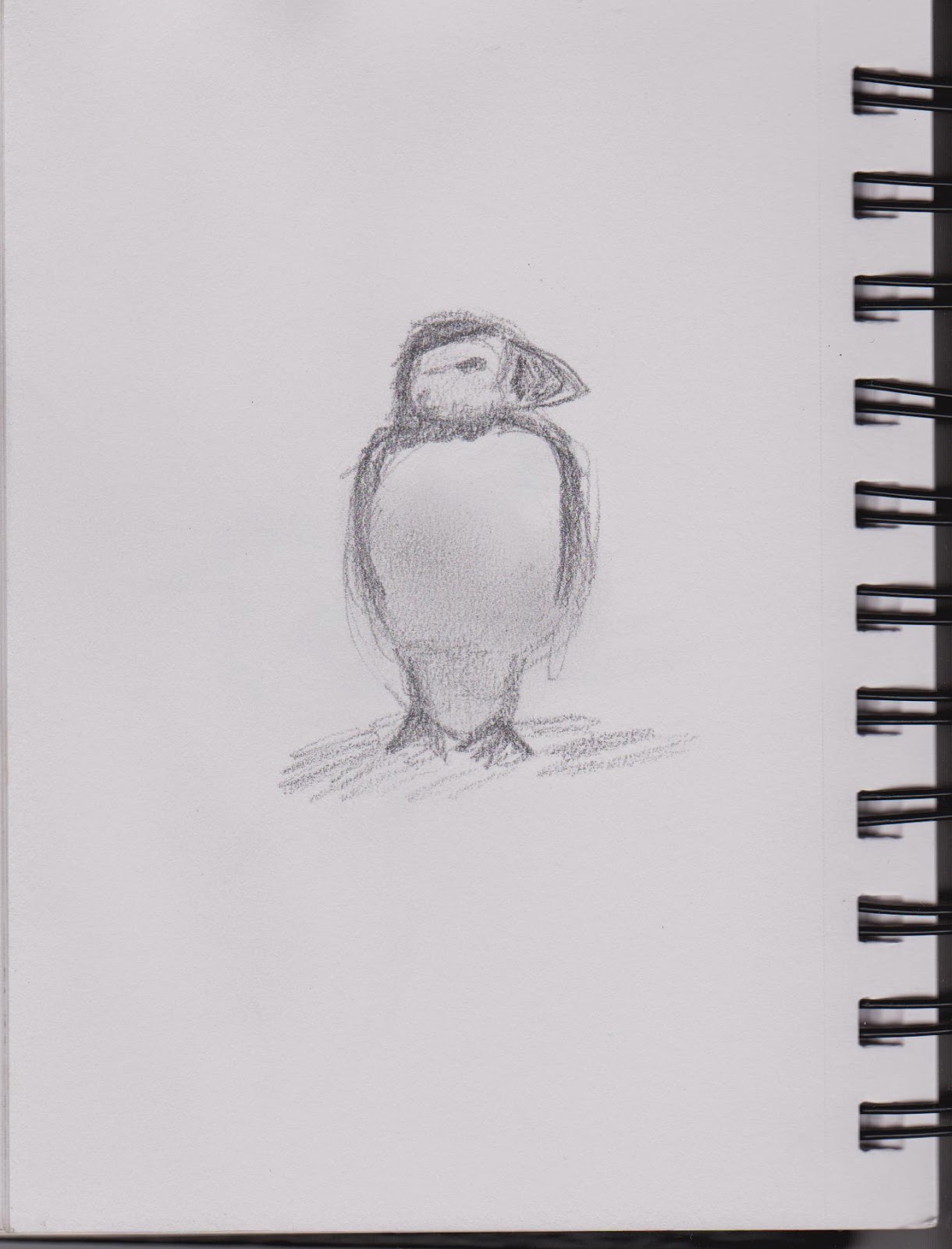
Atlantic Puffin

Atlantic Puffin

flying

Common Tern

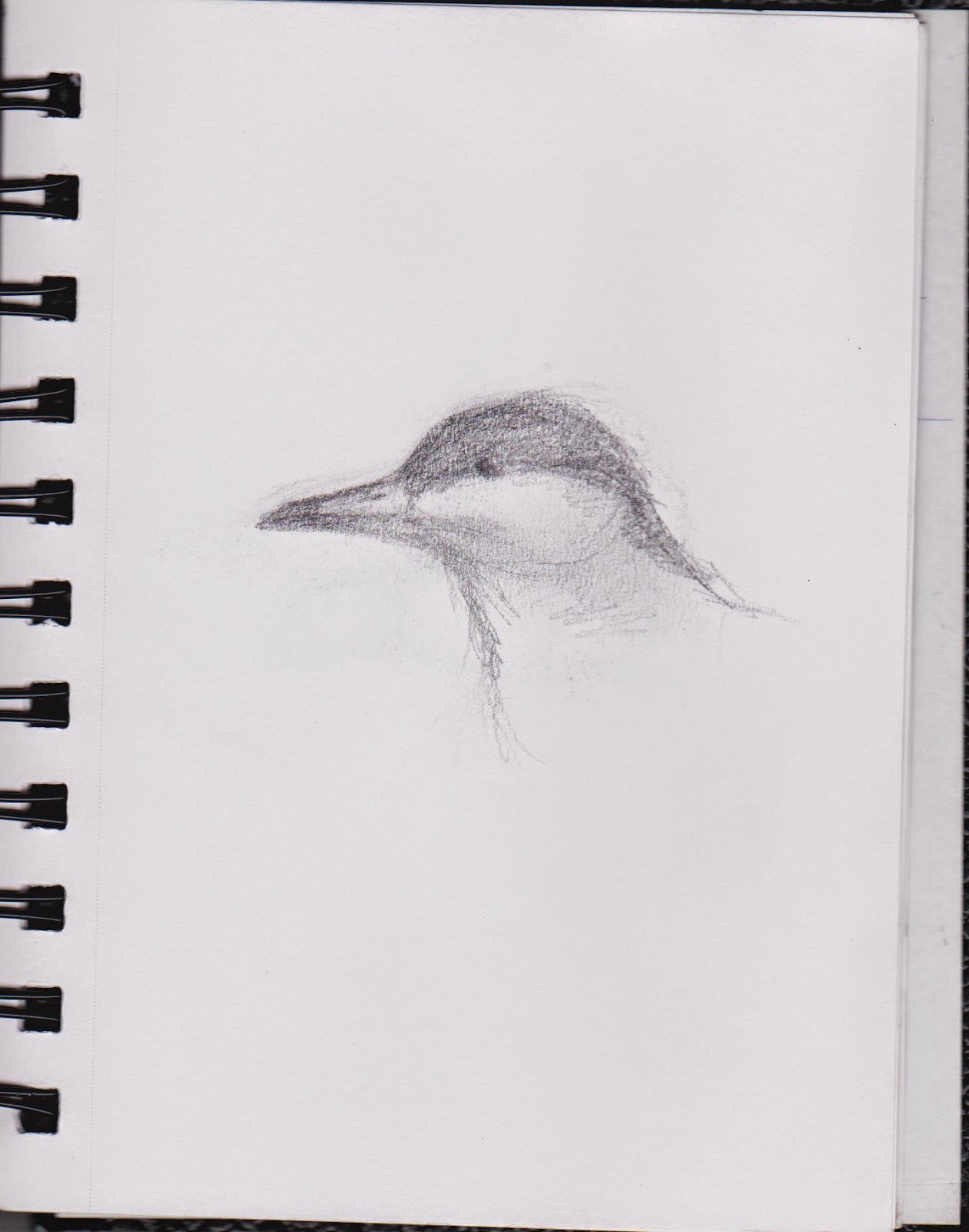
Common Tern profile

Bee

Last week during a walk with my dog, I found a poor little bumblebee lying on the sidewalk. Under close examination I realized it must have died just before I had come upon it. My curiosity took over me and I decided to sketch the cute pollinator.


Monday, 5 May 2014

Meeting Bird Artist and Author David Sibley


I had the wonderful opportunity to witness bird artist David Sibley speak today at Point Pelee National Park. Known for his nature field guides, he is a keen observer and masterful with the paint brush. I always cherished his Sibley Guide to Birds as an essential tool for my tricky bird identifications, and I was very enthusiastic to finally meet him. In his presentation, Sibley demonstrated the development of his skill as an artist from age eight to the present. He explained that sketching from life is an important way to familiarize yourself with birds and to improve your drawing abilities. He admitted that keeping a field notebook requires much time, repetition, and patience; however, it comes with many rewards. I found Sibley’s Northern Hawk-Owl drawings especially memorable, which beautifully conveyed how practice allows you to progress as an artist. David Sibley certainly inspired me to be sketch birds more and to allow my drawing and observation skills to soar. I sincerely hope that one day my sketches and paintings will attain David Sibley’s level of proficiency.

Above is my sketch of a very cooperative Pine Warbler. I observed it on the DeLaurier Trail at Point Pelee National Park.

Sunday, 27 April 2014

Cool Spring Birds: The Red-winged Blackbird and the Northern Flicker

Above is my sketch of a Red-winged Blackbird. The males of this species fiercely defend their territories during the breeding season, spending more than a quarter of daylight hours in territory defense. The Red-winged Blackbirds chase other males out of the territory and attack nest predators, sometimes going after much larger animals, including horses and people.

This is my drawing of a Northern Flicker. They are fascinating birds: although they can climb up the trunks of trees and hammer on wood like other woodpeckers, the Northern Flicker prefers to find food on the ground. Ants are its main food, and the flicker digs in the dirt to find them. It uses its long barbed tongue to lap up the ants.